Spring 2026
Product Design & DFAM
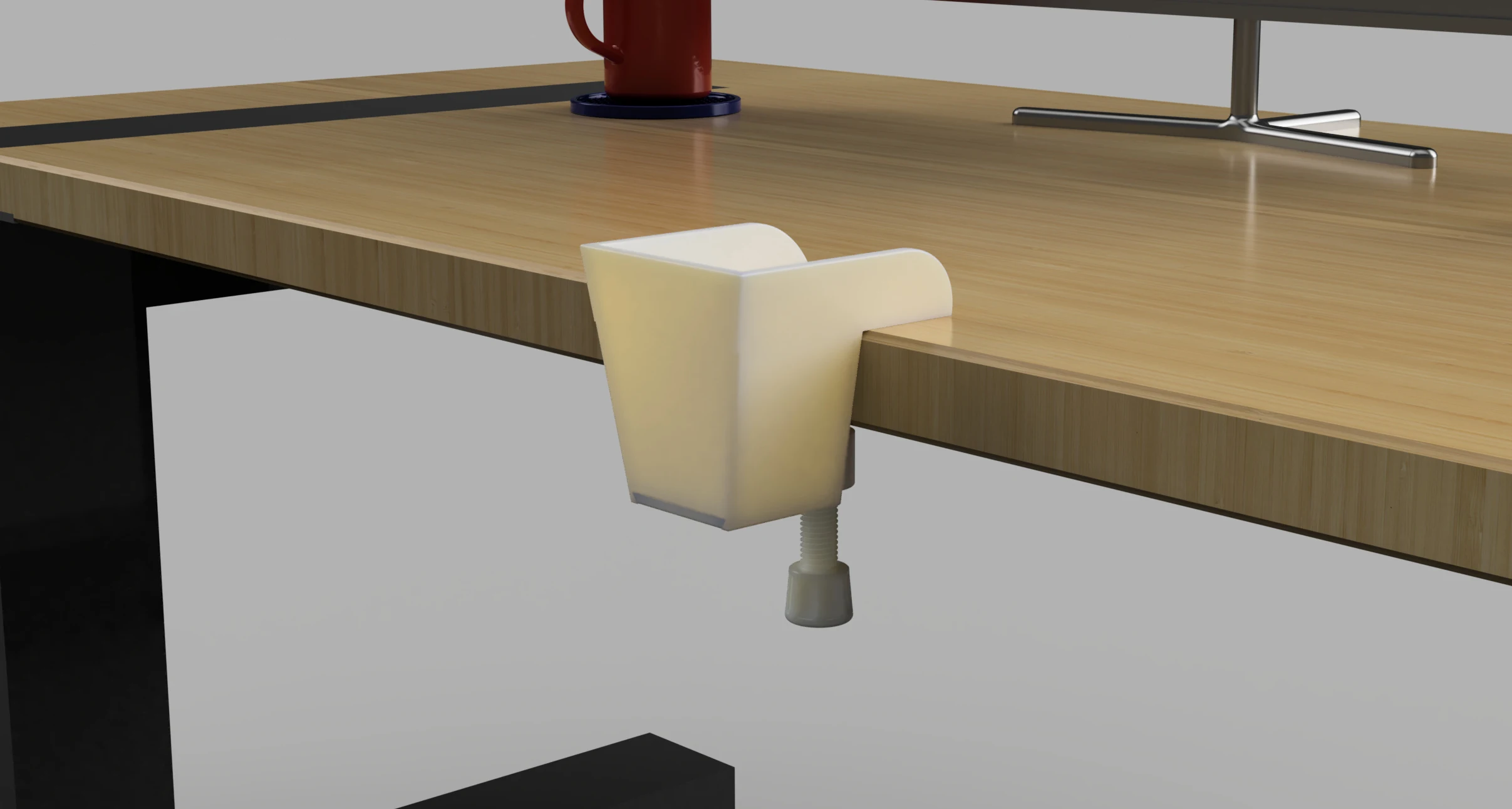
A 3D-printed desk tidy designed around the constraints and opportunities of additive manufacturing.
Desk Tidy
overview
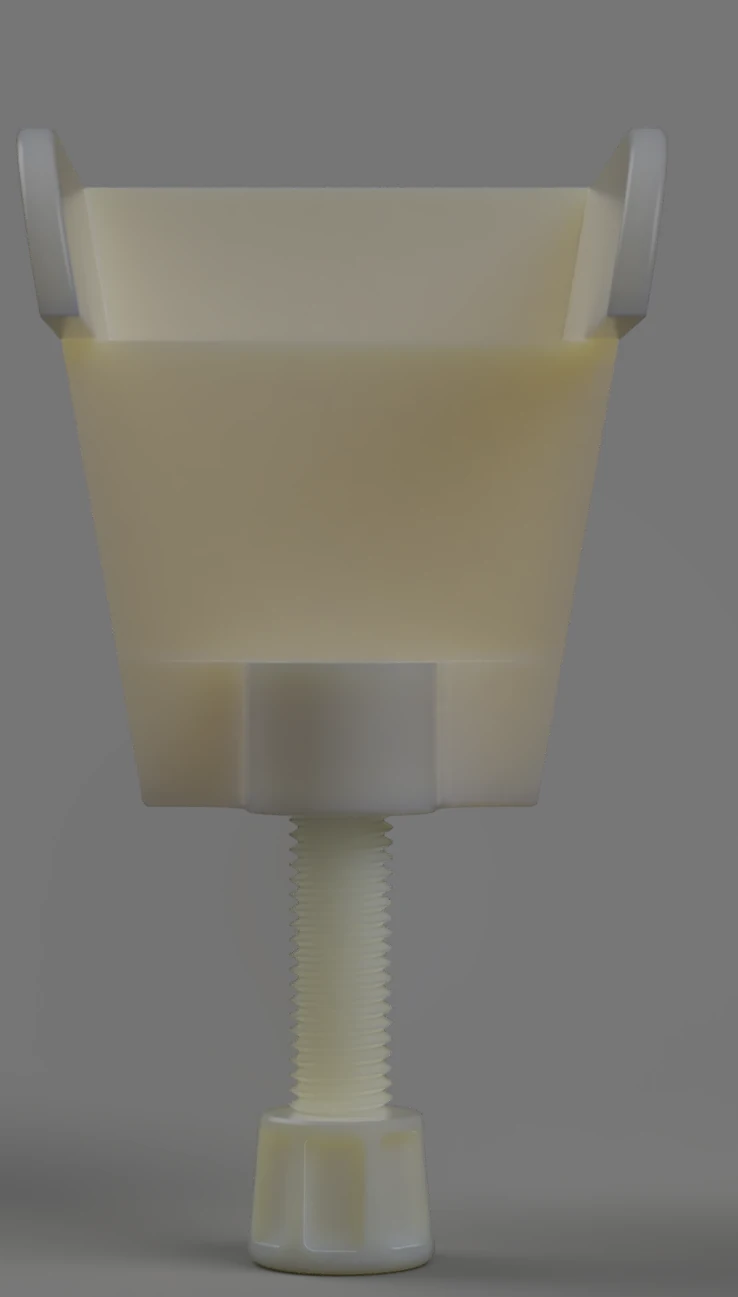
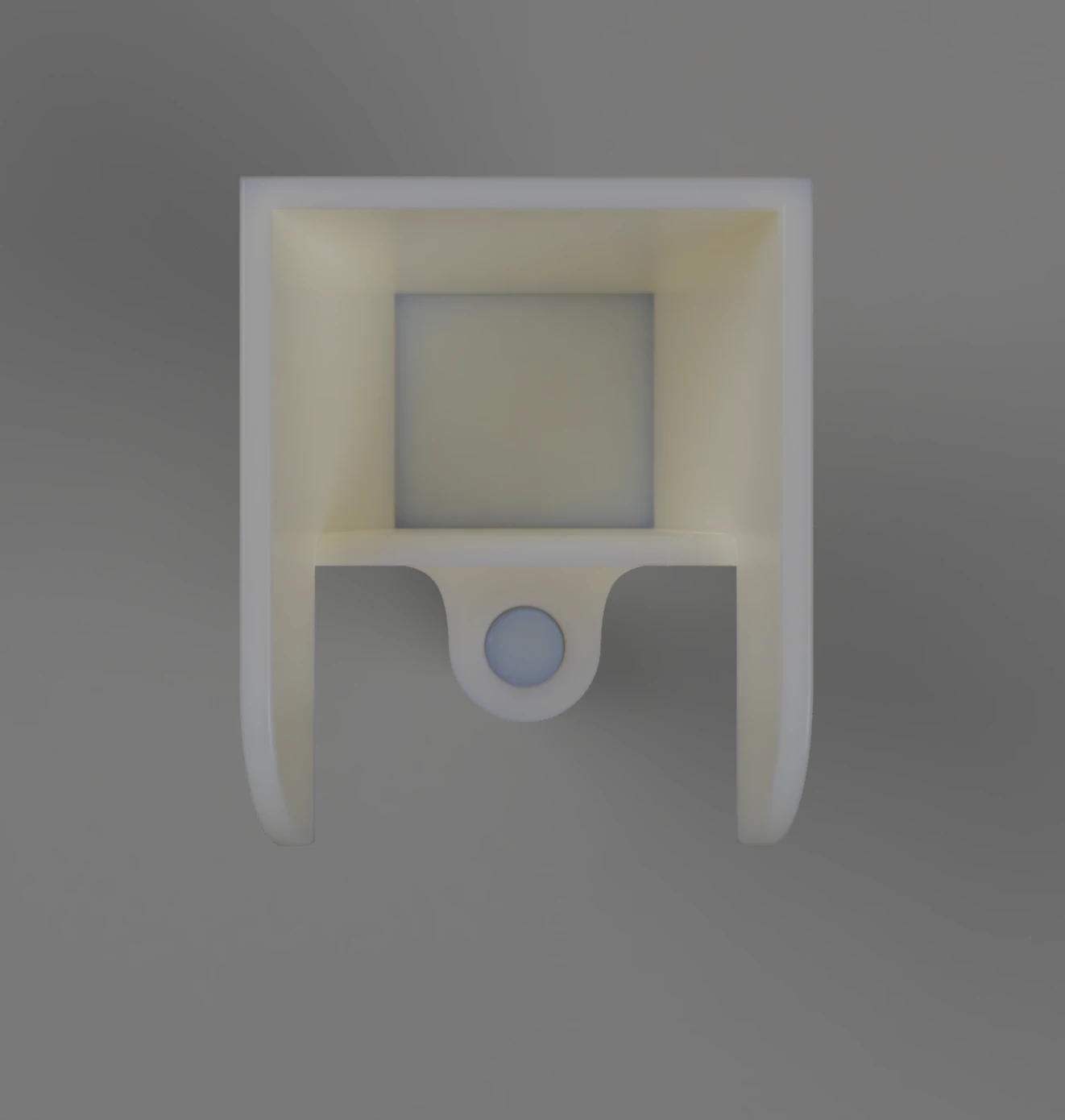
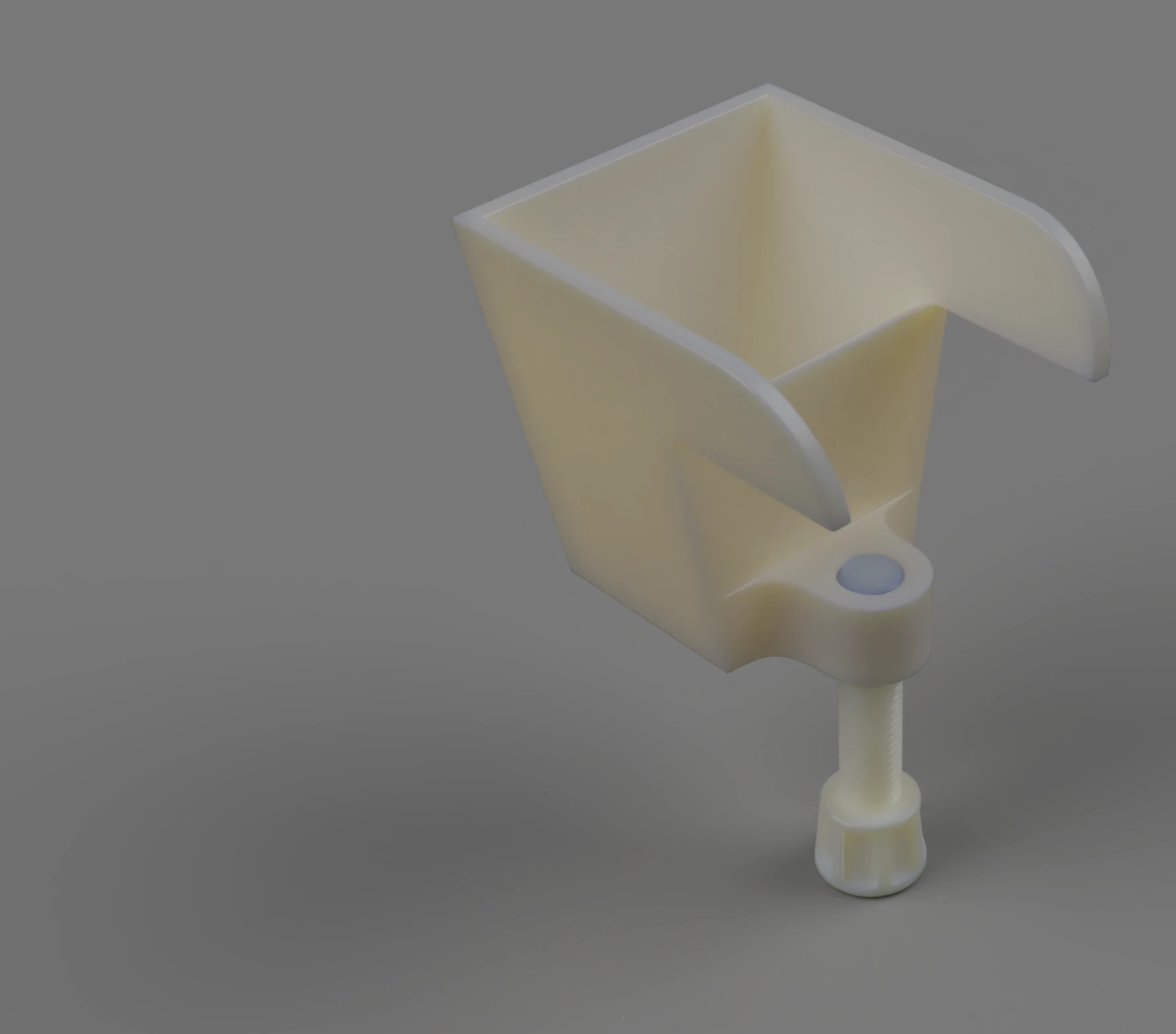
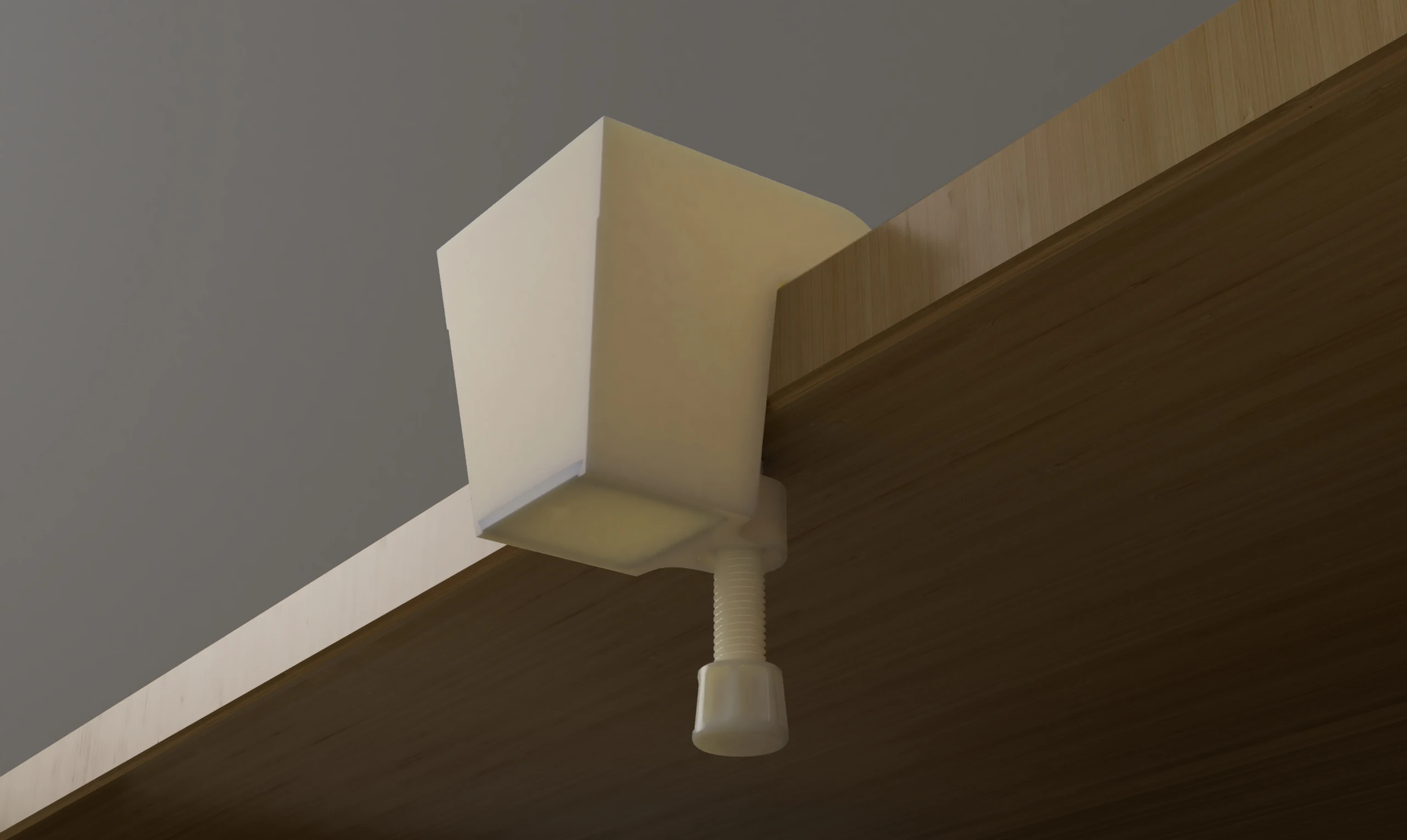
This project explored how a functional desk accessory could be designed specifically for FDM manufacture rather than simply adapted for 3D printing. The final concept combines storage with an integrated desk clamp, allowing the product to attach securely to the edge of a workspace.
The design was developed around strict manufacturing constraints, including limited material, print time and build volume. These restrictions informed the form, part separation, tolerances and mechanical details throughout the project.
View full portfolio (PDF) ↗
deliverables
Product Design
Design for Additive Manufacturing
CAD Development
Prototyping
01 — Design & DFAM
Developing the product around the capabilities, limitations and manufacturing logic of FDM 3D printing.
about
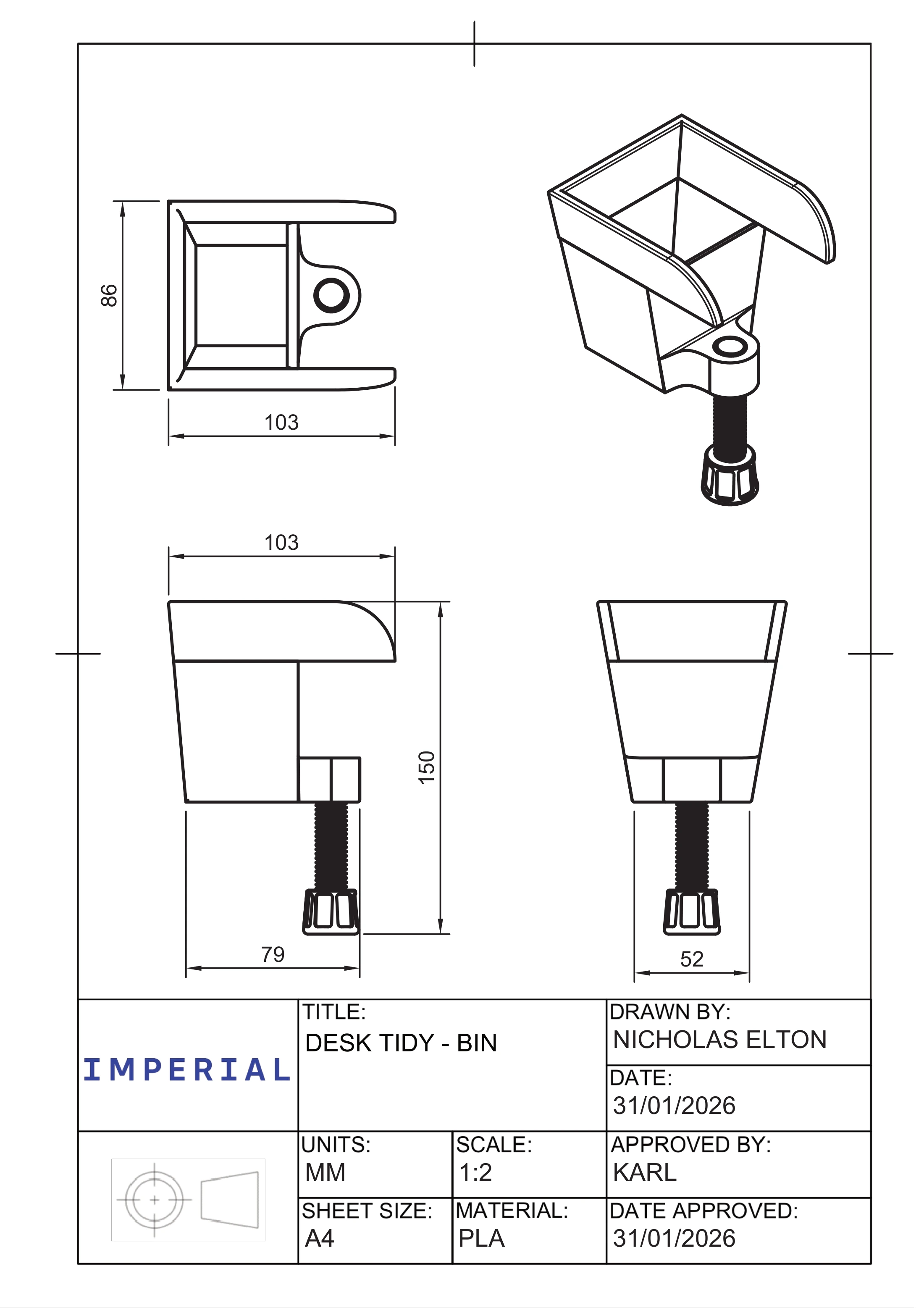
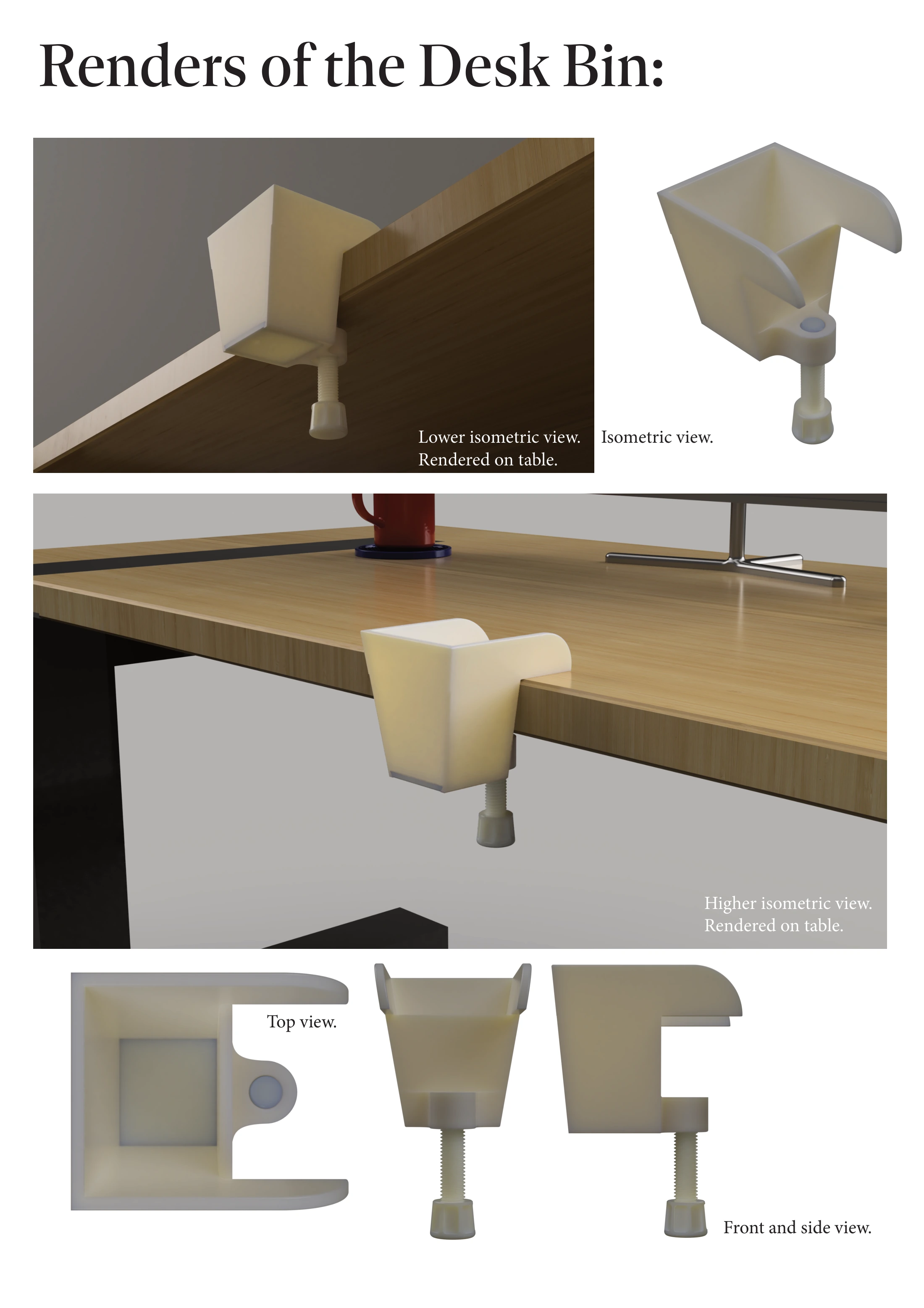
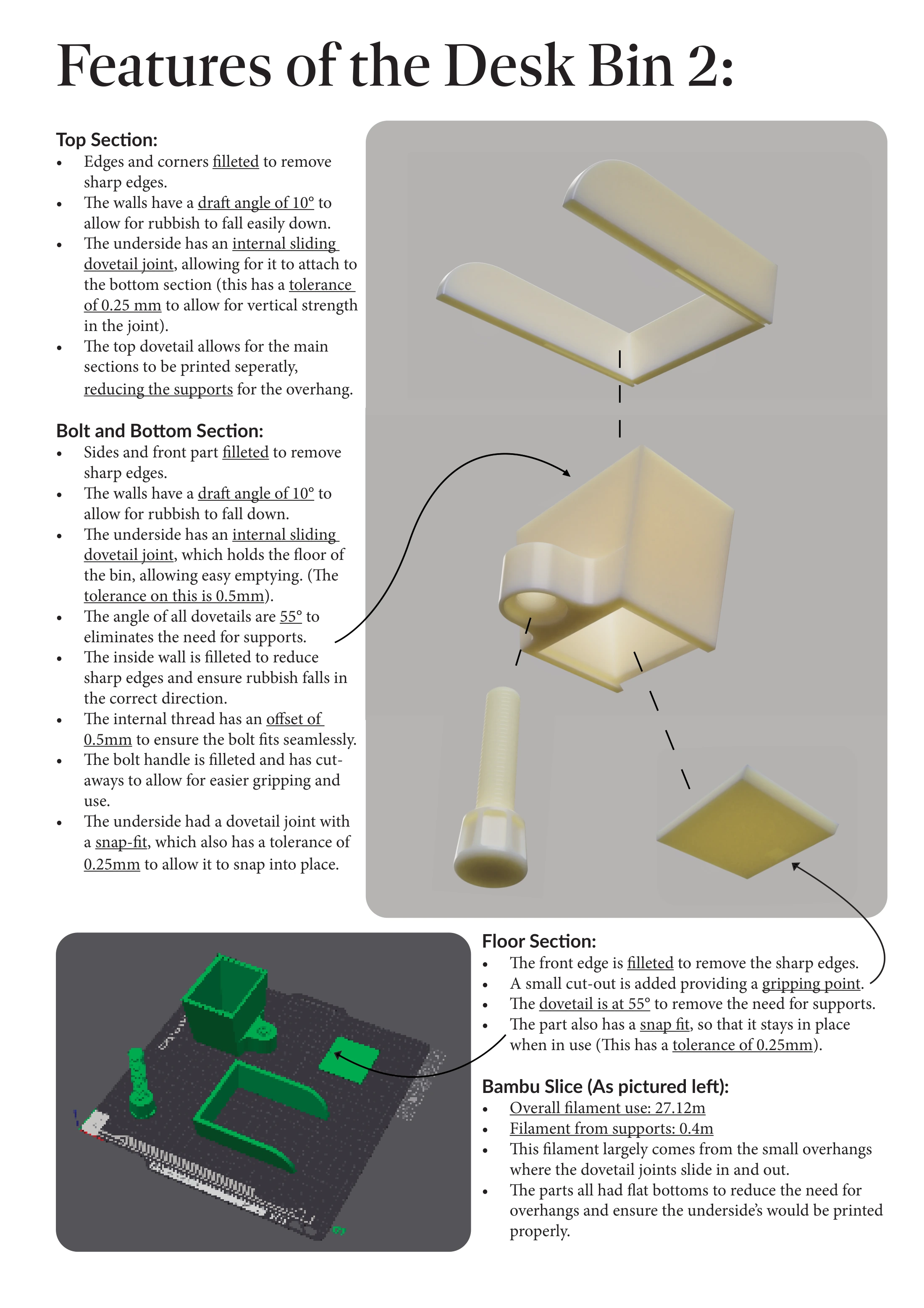
The design was developed within a 200 mm build volume, a 30 m PLA allowance and a 24-hour print limit. These constraints encouraged a compact form and required careful consideration of part orientation, material use and how the product could be divided for manufacture.
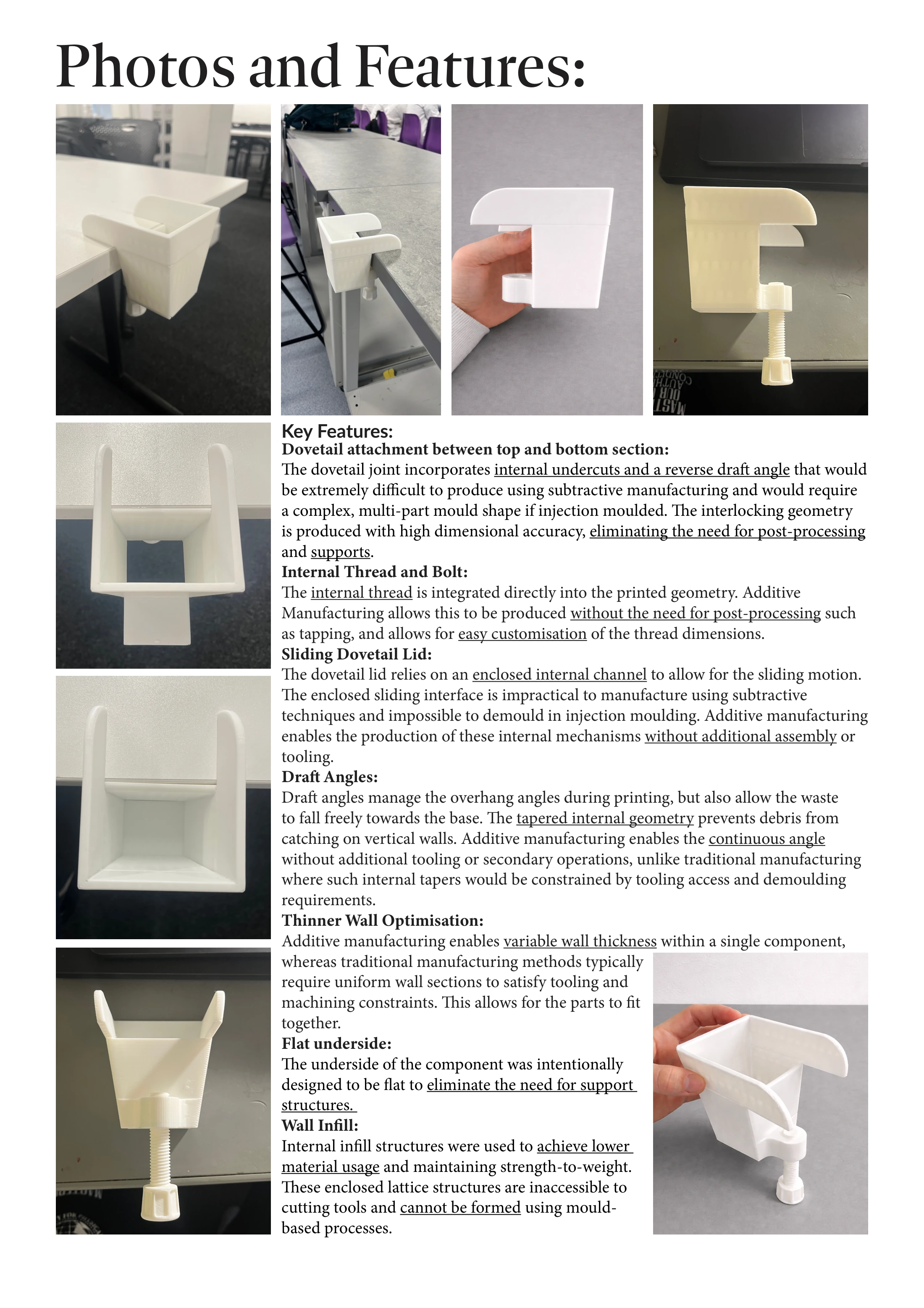
Features including the integrated clamp, threaded components and sliding dovetail lid were designed specifically around additive manufacturing, reducing the need for additional hardware while keeping the product easy to assemble.
02 — Prototyping & Refinement
Refining tolerances, joints and printed mechanisms through iterative CAD development and physical testing.
about
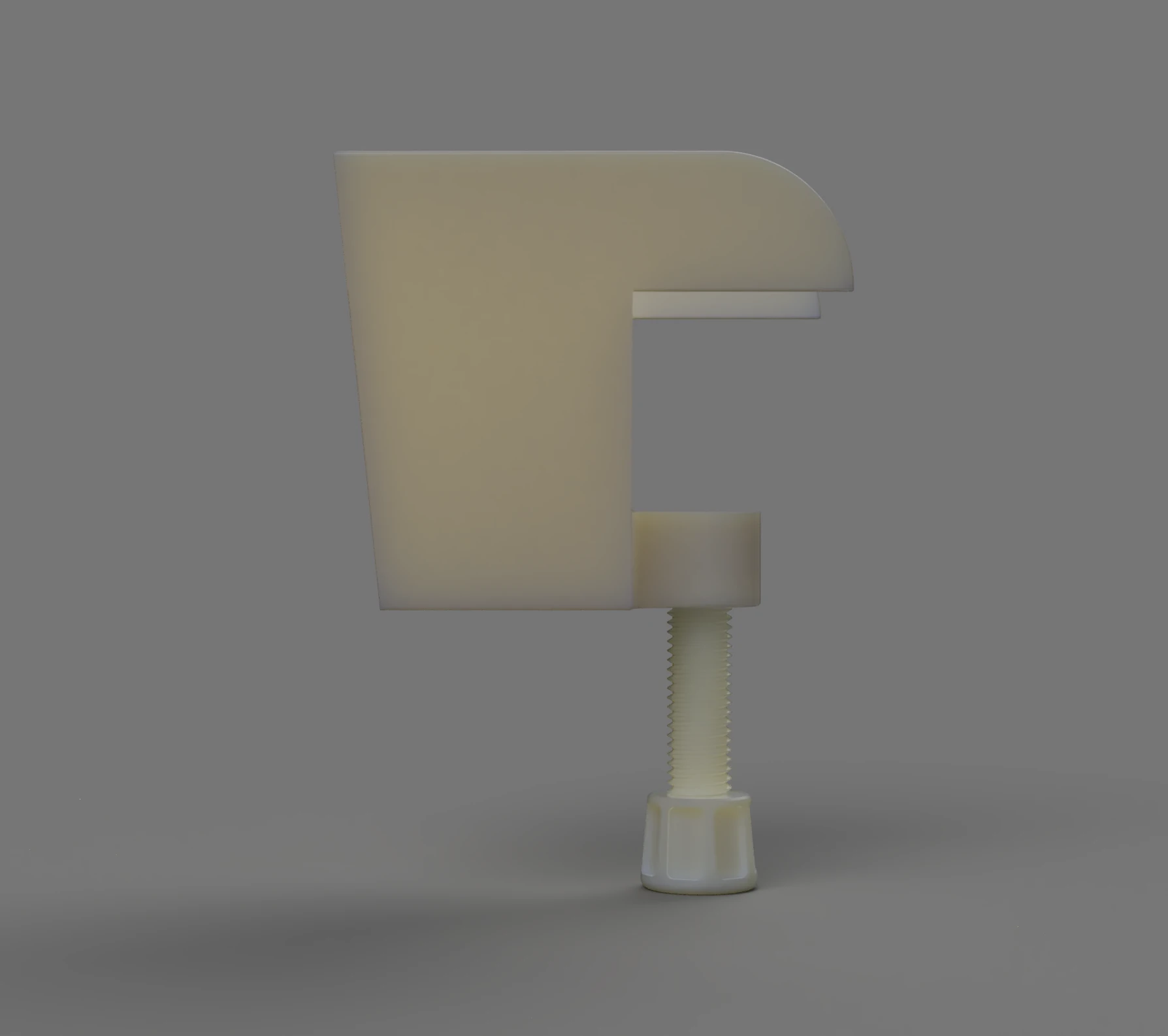
Prototypes were used to test the fit and movement of the threaded clamp, dovetail connection and assembled components. Small dimensional changes were made to improve reliability and account for the tolerances of the printing process.
Clearances of approximately 0.25–0.5 mm were introduced where required, alongside details such as draft angles and adjusted joint geometry, resulting in a design that could be printed, assembled and used without extensive post-processing.
nicholas elton
menu
close